
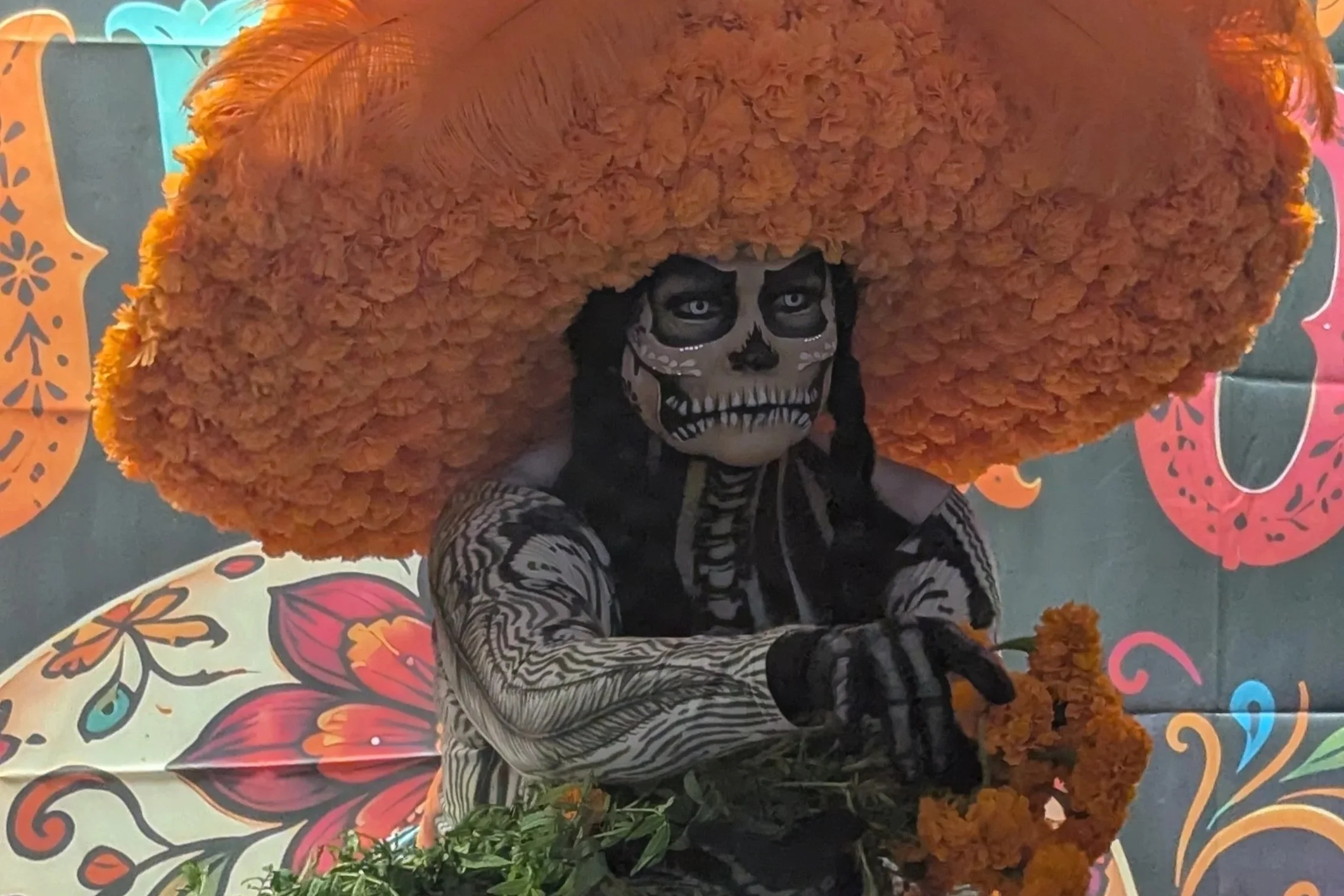
Artist Maria Flores, known as La Muerte Maria, performing with her signature outfit and make up. Photo by Joseph Hernandez.
Mariachi music and danza Azteca echoed through the rooms as the aroma of freshly baked conchas and warm champurrados filled the air; students gathered around colorful offerings, honoring loved ones at the Day of the Dead Beach event on Oct. 27.
To unite the Long Beach community and educate students on Latine traditions and culture, a Día de los Muertos event was held at The Pointe in the LBS Financial Credit Union Pyramid.
Several departments and groups supported the event, such as the College of Liberal Arts Scholarly Intersection Grant, Beach Pride and the Department of Chicano Latino Studies. CSULB assistant professor in Chicano and Latino studies Felicia Montez, who is also the Head of the Day of the Dead committee, organized the event.
Montez said the event aimed to educate students about Día de los Muertos, but also provide a safe space for them to feel connected to the culture and traditions, even if they’re not a part of the Hispanic community.
“It’s important to speak about tradition, and also how tradition changes… through Chicano Latinx studies, we talk about how migrant traditions change, or how there’s a push to oppress and assimilate,” Montez said. “So an event like this is really key to not only have inclusion and belonging for not only Chicano Latinx communities but also to teach traditions and history.”
During the event, students viewed altar displays made by departments and groups located in the Sunset Room of The Pointe. Some of the departments and groups were:
BICSULB: They had a table with a QR code titled “Brown Issues CSULB” made to honor those who’ve lost their lives to ICE raids. The code opened a document that spreads awareness on immigration’s effect within the community.
Spanish Graduate Student Association: They had a display of forty-three candles lit with various images of the forty-three students who were abducted by municipal police in Ayotzinapa, Guerrero, on September 26, 2014. Behind the candles was a wooden chair with a flyer on it describing the mural on display.
ENYE: Their table had pictures of passed Hispanic journalists who helped shape the field, along with photos commemorating family members within the team. They were also handing out their latest magazine issue.
Dream Success Center: Their booth displayed photos of families affected by immigration.
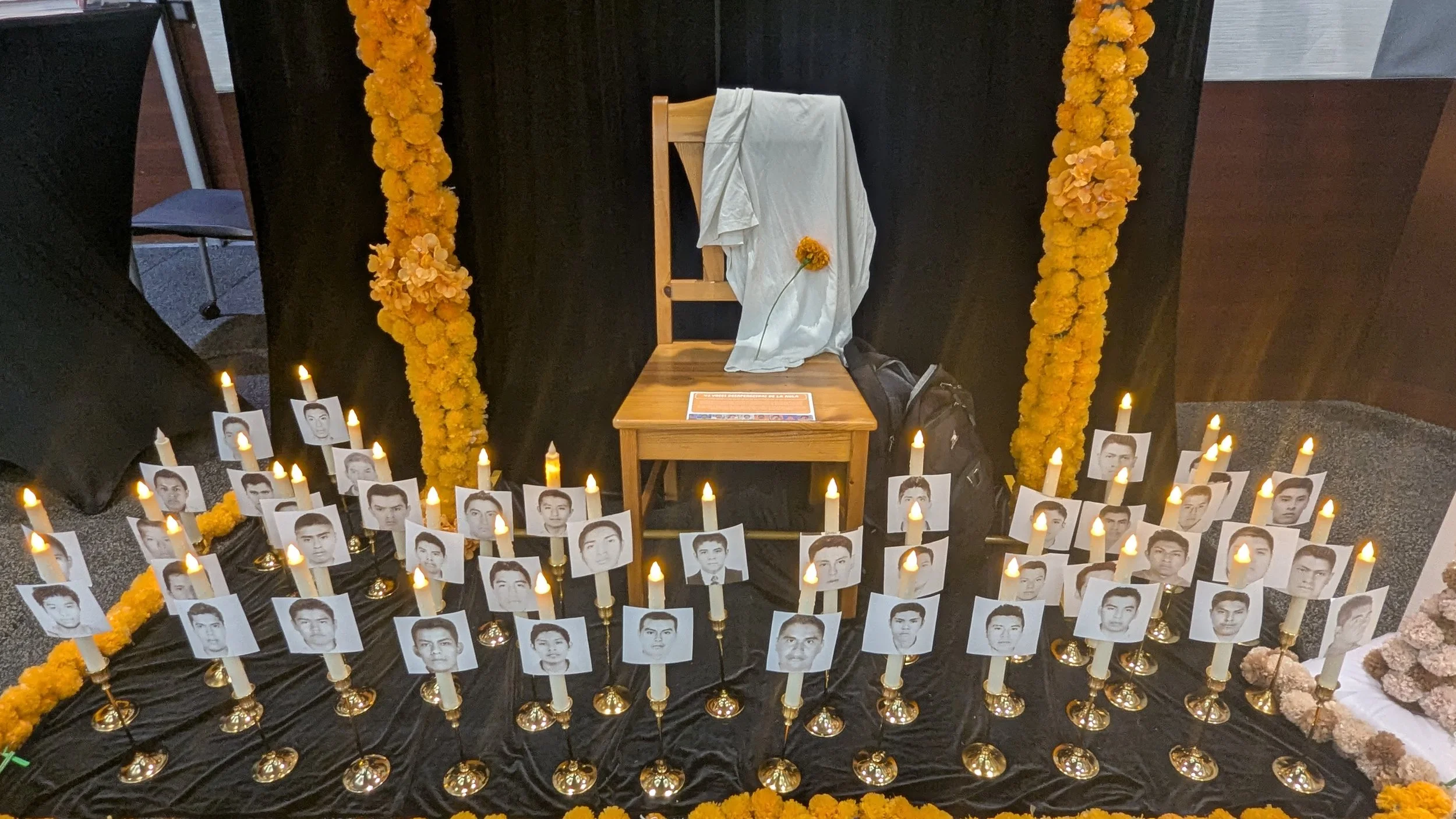
Altar made by the Spanish Graduate Student Association in honor of the 43 students that disappeared at the hands of the Mexican government in Ayotzinapa. Photo by Joseph Hernandez.
The Summit Room held a dedicated space for ofrendas made by students from the Chicano and Latino Studies (CLS) 119 class. Each mural had a design tied to the person honored. Some murals had offerings like drinks, bread and other memorabilia.
Throughout the event, Montez introduced different guests and performers to the stage in the Sunset Room, like artist Maria Flores, who goes by “La Muerte Maria” online. She attended the event in a large calavera-inspired dress with skull face paint.
“Everything comes from my culture, the Mexican culture. It’s rich in color, flavor, music, and life. I try to pull everything from that, you know, from traditions like papel picado,” Flores said about where the inspirations for her outfits come from.
Early in the event, East Los Angeles band Los Cafeteras took the stage, singing original songs and covers like Selena's "Bidi Bidi Bom Bom." They even shared messages about Day of the Dead and the meaning of their songs.
Mariachi Los Tiburones, a CSULB-based mariachi band, also performed during the event. At one point they got the crowd off their seats to dance and ended with a rendition of “Amor Eterno” by Rocío Dúrcal.
Artist Ofelia Esparza was a guest speaker who shared stories about her family and the importance and tradition of Día de los Muertos. A projector also displayed photos of her family and artwork.
“I’m very fortunate to have lived this long and to be able to practice this work and teach many children, and my hope and my prayer is that you (the audience) continue this, that you continue this kind of love and tradition, connection and community,” Esparza said during her speech.
Beyond the murals, music and guests, students also participated in workshops, such as papel picado, frame painting, and calavera painting. Outside in the hallway, activities included the calavera community tortilla press and letter writing in Spanish. There was also face painting with calavera designs.
“I thought it was really nice. I liked seeing my culture fully through the music, the food and the artifacts. It's something culturally significant, and that’s just what I found most interesting,” CSULB student Kayla Del Toro said.