
Stop turning “Latina baddies” into protest props
No matter the issue, women always seem to get the short end of the stick.
The rising immigration debates, which in the wake of the Trump administration have led to nationwide ICE raids and anti-ICE protests, are no exception.
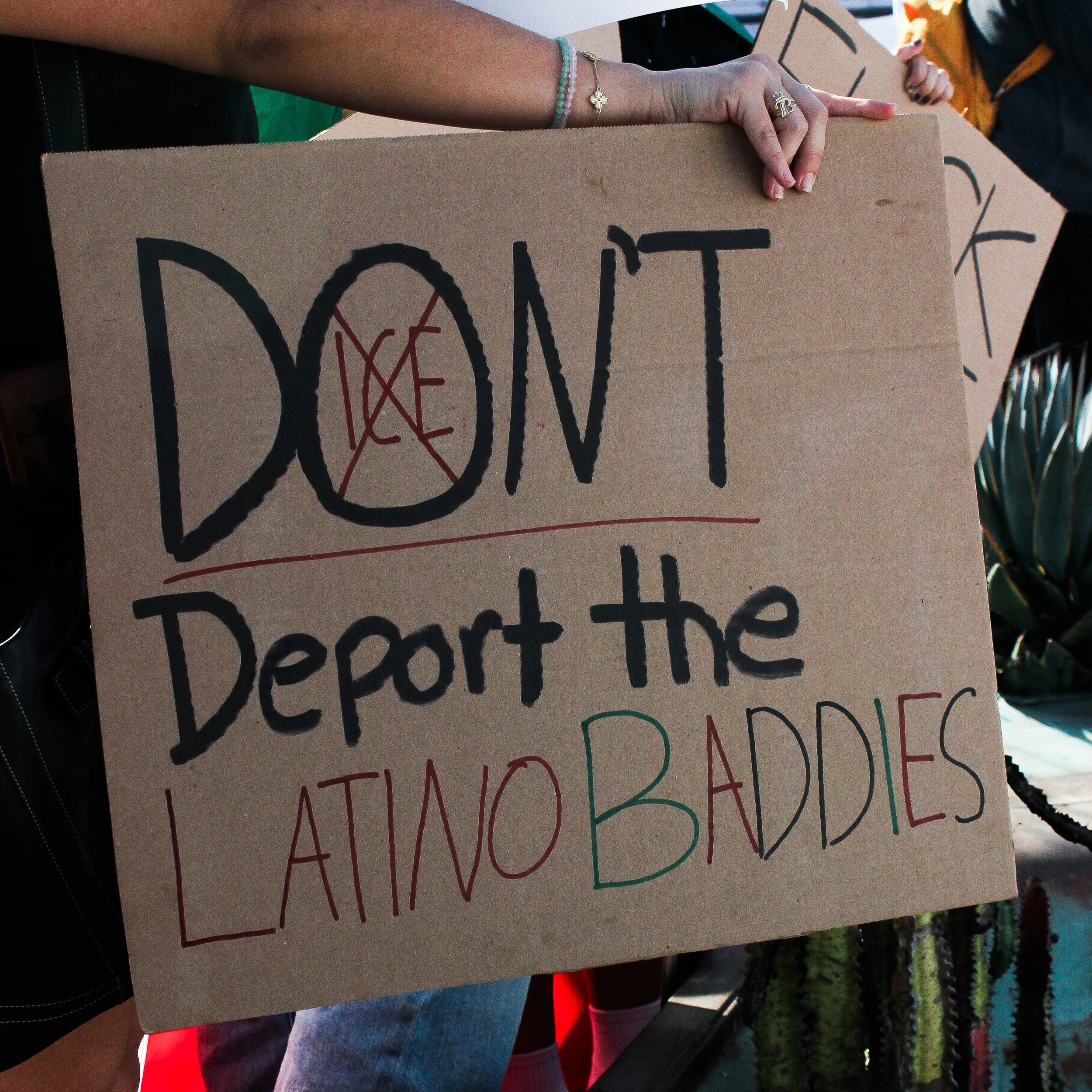
While covering multiple Los Angeles anti-ICE protests recently, I noticed an interesting phenomenon. Across numerous signs, the same message kept appearing:
“Don’t deport Latina baddies.”
“Latina baddies can stay.”
“Protect big booty Latinas.”
On the surface, these signs might seem like tongue-in-cheek pro-immigration statements. But, at the risk of sounding like a wet blanket, I strongly believe this kind of messaging does more harm than good.
Regardless of intention, jokes about Latina women being worth protecting because of their looks don’t just undercut the immigration cause, they also damage the U.S. Latina experience, which is already fraught with danger and shaped by sexism.
With the fight against sweeping and unconstitutional ICE raids ramping up, this kind of messaging should be retired. Among other problems, it’s discriminatory, makes light of sexual violence and reinforces sexist stereotypes that have haunted Latina women for centuries.
Put simply, this practice of isolating Latinas is sexist.
It implies that no matter how hard Latina women work or how much they contribute, their value still depends on their bodies and sexuality.
According to a 2024 study from the Pew Research Center, 52% of U.S. Latinas say sexism in the workplace is a big problem and 62% say they face great pressure to appear beautiful.
When activists echo the same language that objectifies Latina women, even jokingly, they’re reinforcing the same power structures that demean them. What’s worse, this “Latina baddie” sentiment isn’t limited to one side.
Right-wing trolls like comedian Alex Stein and streamer, Zack “Asmongold” Hoyt, have made similar remarks, saying they’re fine with “some Latinas staying” as long as they find them attractive. When anti-immigration commentators and supposed pro-immigration allies are making the same joke, that should be a red flag.
Activists who genuinely support women and immigrant communities should take note of who else is laughing.
This kind of humor also trivializes rape.
When you break it down, the unspoken joke behind, “Don’t deport big booty Latinas” is that men would spare attractive women from deportation in exchange for sexual favors. It’s not funny. It’s coercion disguised as comedy.
A National Intimate Partner and Sexual Violence Survey found that while Latinas do not report higher rates of victimization than other groups, one in seven Latinas has experienced a completed rape in their lifetime. That number alone should end the joke.
The casual trivialization of these realities can help explain why some women are afraid to reach out for help.
Finally, this rhetoric reinforces old and harmful stereotypes, particularly that of La Malinche, the Indigenous woman vilified in Mexican history as a “traitorous harlot” for aiding the Spanish conquistadors.
For centuries, La Malinche has been used to label women seen as betraying La Raza for their sexuality or proximity to power. In truth, La Malinche was a woman with little agency, forced into her role under threat and for survival. Even Mexico’s president, Claudia Sheinbaum, has joined historians in reevaluating her legacy, not as a villain, but as a woman exploited and misrepresented by men.
Like La Malinche, Latina women today still face judgment and fetishization for choices or traits often beyond their control. Turning that history into a meme or a protest punchline repeats the same cycle of blame and objectification.
Like those historians now rethinking La Malinche’s story, American activists should also rethink their own. Advocating for immigration reform by sexualizing Latina women isn’t funny, and it doesn’t work.
If you really support Latinas, retire the baddies messaging and start protecting Latina women, including their dignity, safety and respect.